













The Link Between Employee Experience and Stock Performance in the S&P 500
The most comprehensive employee experience study of the S&P 500 to date
Using Welliba’s AI-powered EXcelerate platform, we analysed more than 25 million data points from over 150,000 public sources to build the most detailed picture of employee experience (EX) across the S&P 500 ever assembled.
Unlike traditional sentiment analysis, this approach goes beyond opinions and anecdotes. It reveals structural, predictive connections between employee experience and long-term business performance.
Scroll to view key insights or use the navigation below to use our tools & learn more about this study.

A Clear Advantage:
High EX Companies Outperform the Market
Does employee experience create a measurable financial advantage?

To answer this, a simple but rigorous approach is needed:
Step 1: Identify the highest-scoring S&P 500 companies by overall EX
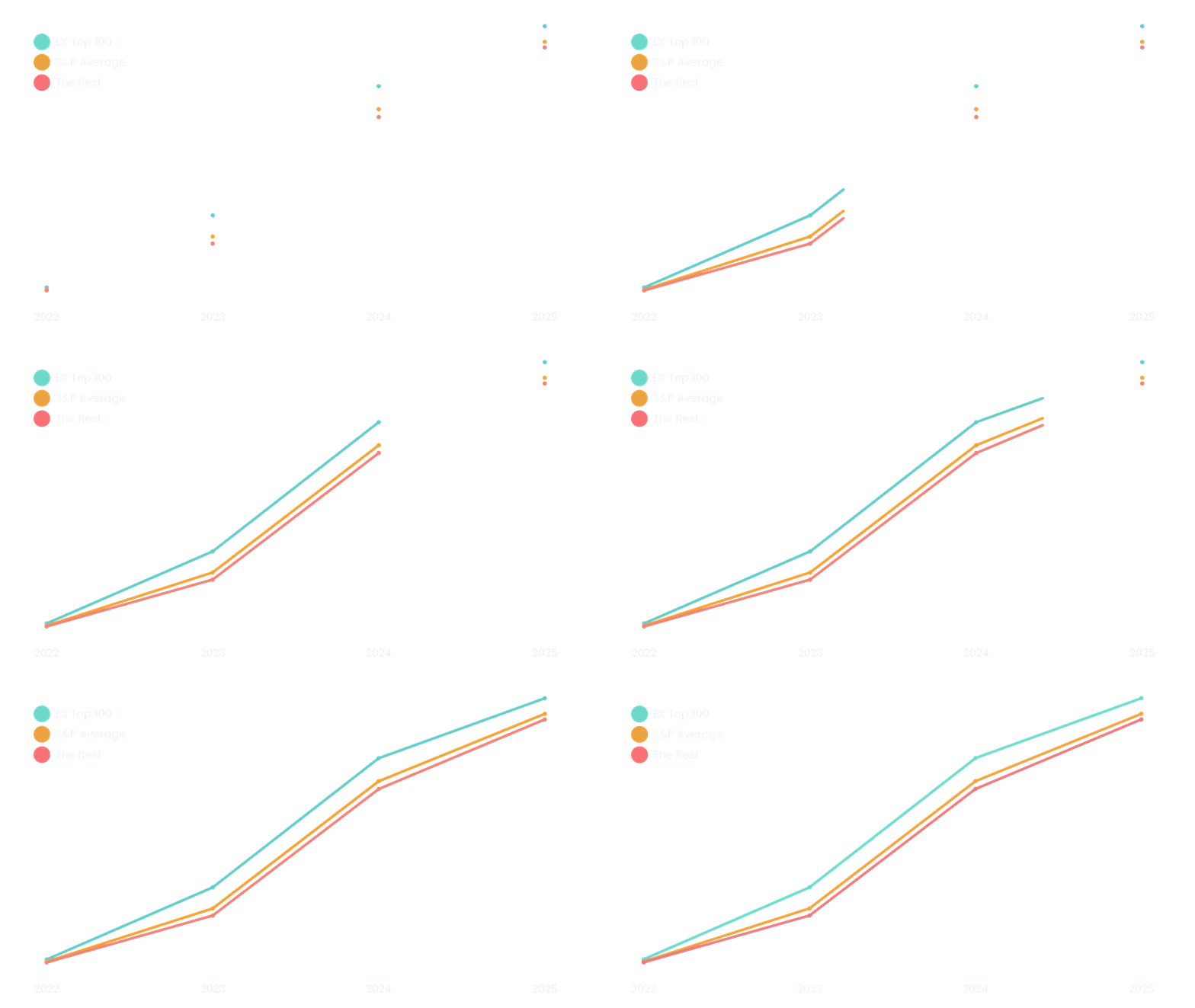
Step 2: Track their Total Shareholder Return over the past five years
Step 3: Compare their performance to the rest of the index
The result is unambiguous.
Companies with stronger employee experience delivered 5% higher returns than the market average over the same period. Those that had invested in this high-EX cohort in 2020, would be materially better off today.
Employee experience is not a “soft” metric. It confers a real, compounding competitive advantage.
Exploring the Landscape:
Employee Experience × Stock Growth
Not all performance stories are the same
Business performance is shaped by many forces. What has historically been unclear is where employee experience fits into that picture. Now that the relationship is visible, it is possible to examine how individual companies and industries compare.
Use the interactive controls to explore the S&P 500 by industry, or search for a specific company. Press enter to select filter.
From this analysis, four clear organisational patterns emerge
High Growth · High EX
Companies already translating strong employee experience into sustained market-beating performance.
The cohort is characterised by high alignment between employee sentiment and business strategy. In particular, very few low scores are seen in the areas of Work Content and Strategy & Culture.
Low Growth · Low EX
Organisations where poor employee experience may be actively contributing to underperformance.
Here, we find frequent low scores in Work Content, with almost one in two companies in the cohort having a blocker in this area. This indicates a lack of autonomy, purpose and task variety combined with high workloads and poor alignment with company strategy.
Furthermore, Communication is a blocker for 71% of companies in the cohort. This implies an important connection between performance and interaction between leaders and teams.
High Growth · Low EX
Financially successful today, but potentially at the expense of employee wellbeing. These firms may face elevated future risk.
Poor scores are observed here in working conditions. This area contains the rewards factor which hints at employees feeling left behind by company success/growth. Very few high scores are observed in terms of career development which points to a similar issue. Even though the company may be growing, employees feel like they are not. The challenge for firms in this sector is to make employees feel included in the company’s success or risk losing their best talent.
Low Growth · High EX
Companies with strong internal alignment and engagement, but whose market performance has yet to catch up. Ones to watch.
Retention is likely to be high in these firms. This is encouraged even further by the relatively high scores measured in the Career area. In fact, over one in five companies in the cohort list Career as a booster, the highest proportion of any group. Employees clearly feel like these companies are good places to grow and develop as people and professionals.
Companies in this sector should take confidence from the strong employee experience signals they have. Having an engaged workforce that is aligned with business strategy gives an organisation much greater advantage and ability to navigate business challenges.
The Organisational Fingerprints of Success
Overall EX scores are not actionable on their own
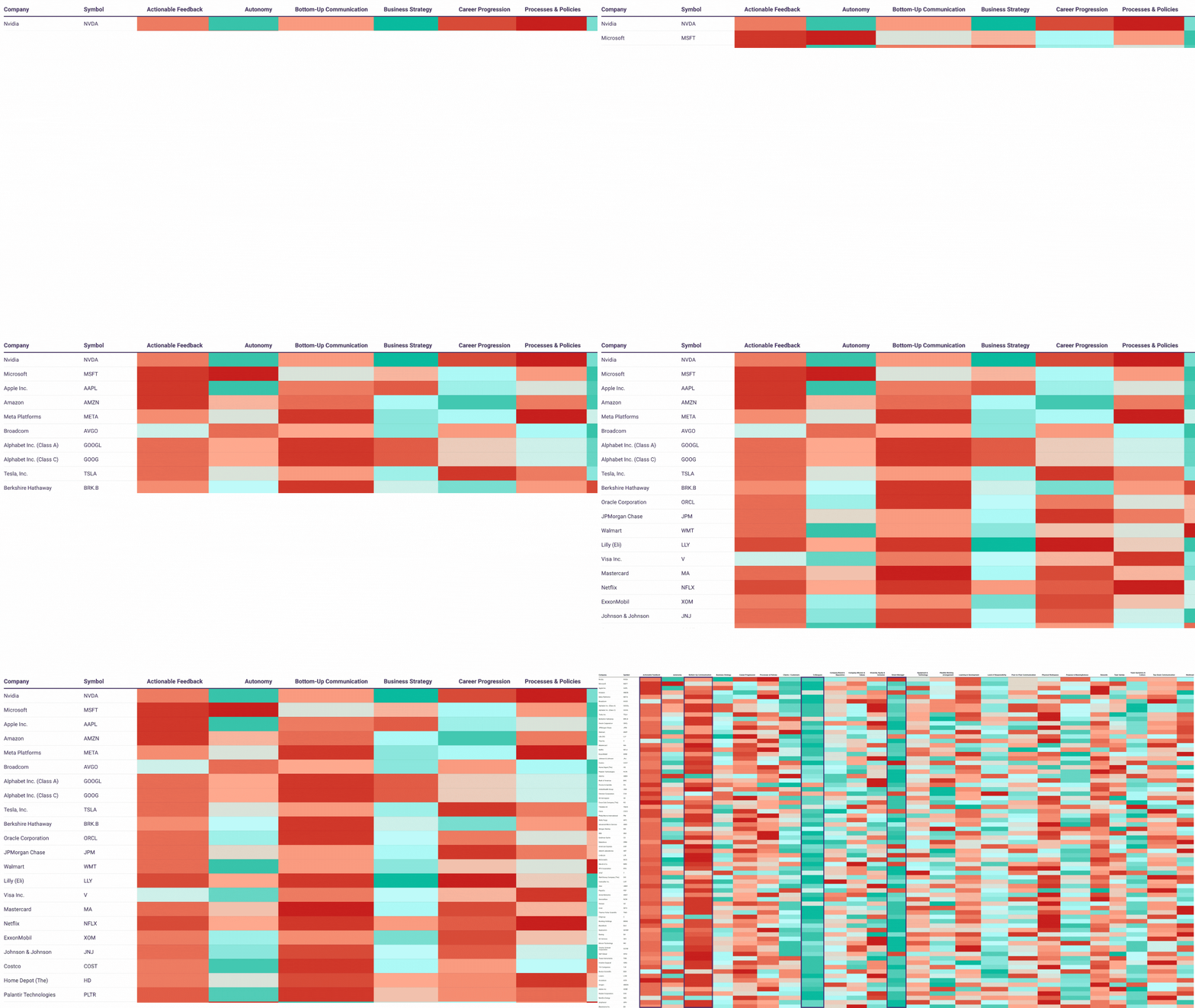
To drive meaningful change, leaders need to understand what actually drives experience inside the organisation. Welliba breaks employee experience into its core factors, based on our EX model. For each company, we have identified:
Boosters: the top three factors strengthening experience
Blockers: the top three factors holding it back
Together, these form an organisation’s EX fingerprint.
Use the filters below to explore boosters and blockers across the S&P 500 by industry, or for individual companies.
A button here to explore the model? Do we even have that lol?
A 30,000-Foot View of the S&P 500 EX Genome
What happens when a macro level view is taken and all 500 companies are examined together?

Stacking the boosters and blockers across the entire index reveals striking patterns. Two insights stand out:
People consistently drive positive experience
Across the S&P 500, human interactions are the strongest positive force, even in low-EX organisations.
Relationships with Colleagues
is a booster for
66%
of companies
Relationships with Direct Managers
is a booster for
62%
of companies
People remain the most resilient asset in employee experience.
Blocking factors are highly contextual
There is no single way organisations fail on EX. This variation makes context and benchmarking critical.
Bottom-Up Communication
is the most common blocker for
56%
of companies
No Other Single Blocker
appears in more than
29%
of companies
The EX challenges of one organisation are unlikely to be the same as another.